You’ve finally landed that big interview or a high-stakes call with a client in California. You double-check your calendar, set your alarm, and show up perfectly on time—only to find the virtual meeting room empty. You realize with a sinking feeling that you’re exactly one hour late. Or was it an hour early?
Last updated: June 28, 2026
Living or working across the Pacific Standard Time timezone is a constant exercise in mental math. It’s frustrating to feel like you’re always chasing the clock or accidentally waking up a colleague at 5:00 AM because you forgot about the coastal gap. You need a reliable way to lock in the right time every single time.
This guide is designed to strip away the confusion. We are going to break down how this timezone works, why it changes, and how you can manage your schedule without the headache.
What is Pacific Standard Time Timezone?
The Pacific Standard Time timezone is a specific time offset used primarily in the western part of North America. It’s defined by its relationship to Coordinated Universal Time (UTC). Specifically, PST is eight hours behind UTC ($UTC-8$).
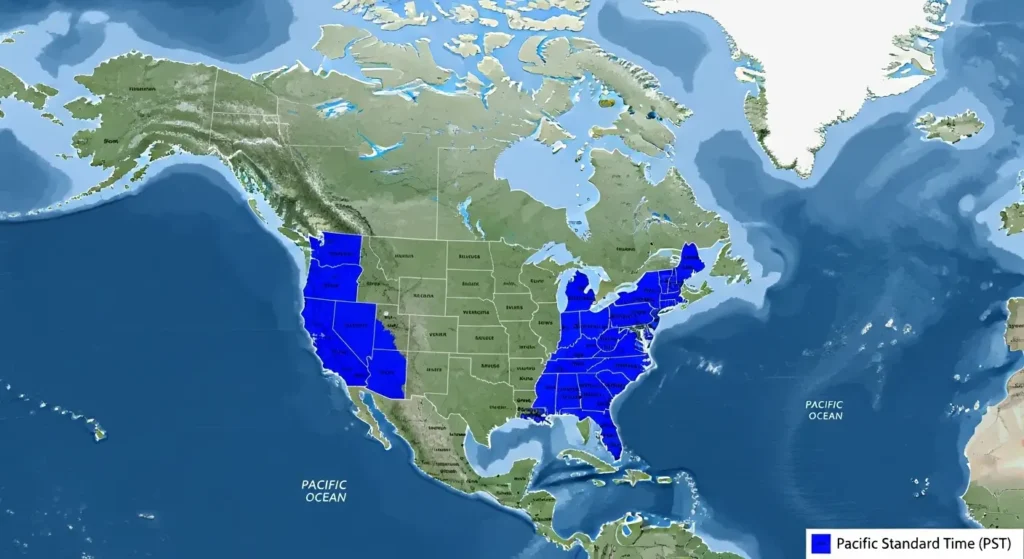
When you are on this time, you are in the same rhythm as major hubs like Los Angeles, Vancouver, and Seattle during the winter months. It covers a vast stretch of geography, from the rugged coastlines of British Columbia down to the Baja California peninsula in Mexico.
it’s important to remember that “Standard Time” is only used for about four months of the year. For the rest of the year, most of these regions switch to “Daylight Time.” Understanding this distinction is the key to never missing a deadline again.
Pacific Standard Time Timezone Explained with a Real Scenario
Let’s look at a common workplace scenario. Imagine you are a project manager in New York (Eastern Time) trying to coordinate a software launch with a developer in San Francisco (Pacific Standard Time).
It’s January, so the developer is currently observing Pacific Standard Time. You want to hop on a call at 1:00 PM your time. You might think, “That’s lunch time, they’ll be free.” However, because San Francisco is three hours behind New York, it’s only 10:00 AM for them.
The developer is likely in the middle of their morning “stand-up” meeting. If you don’t account for that three-hour gap, you aren’t just inconveniencing them; you are potentially derailing their entire morning workflow. Correctly identifying the timezone offset ensures that “9 to 5” means the same thing to everyone on the team, regardless of their physical location.
9PM PST to EST: The Ultimate Time Zone Conversion Guide
How to Calculate PST: Step-by-Step Instructions
Calculating the time in the Pacific Standard Time timezone doesn’t require a degree in physics, but it does require a consistent process. Follow these steps to get it right:
-
Check the Current Date: Determine if we are currently in Daylight Saving Time (typically mid-March to early November) or Standard Time (November to March).
-
Identify UTC: Find the current Coordinated Universal Time. Many digital watches and smartphone “World Clock” apps list this by default.
-
Subtract Eight Hours: If it’s winter, subtract 8 hours from the current UTC time. Pacific Standard Time Timezone: The Ultimate Planning Guide gives you the current PST.
-
Confirm the Region: Double-check that your contact is in a state or province that follows the Pacific clock (Washington, Oregon, California, Nevada, or British Columbia).
-
Use a Digital Verification Tool: Before sending a calendar invite, use a tool like Google Calendar or World Time Buddy. These platforms allow you to toggle “Pacific Time” as a secondary timezone to visualize the overlap.
Common Mistakes People Make
The most frequent error is using “PST” as a catch-all term. People often write “PST” in their email signatures all year round. However, if it’s July, California is actually on PDT (Pacific Daylight Time). This one-letter difference represents a one-hour shift.
Another mistake is ignoring “Exceptional” regions. Not every area in the Pacific geographic region follows the same rules. For example, while most of the region “springs forward,” some local municipalities or nearby territories might stay on Standard Time year-round.
Finally, many people miscalculate the UTC offset during the transition weeks. The UK and Europe often change their clocks on different weekends than North America. During those two or three weeks of “overlap,” the standard 8-hour gap between London and Los Angeles might shrink or grow, leading to massive scheduling errors for international teams.
PST vs. PDT: Understanding the Shift
To keep your schedule straight, you must know whether you are in Standard Time or Daylight Time.
| Feature | Pacific Standard Time (PST) | Pacific Daylight Time (PDT) |
| UTC Offset | $UTC-8$ | $UTC-7$ |
| Typical Months | November to March | March to November |
| Clock Status | “Normal” / Winter Time | “Fast” / Summer Time |
| Purpose | Aligning with solar noon | Extending evening daylight |
| Major Cities | Seattle, LA, Vancouver | Seattle, LA, Vancouver |
Pro Tips for Timezone Management
If you work with people in the Pacific Standard Time timezone, stop trying to do the math in your head. Set your computer’s taskbar to show two clocks. Most operating systems, including Windows 11 and macOS, allow you to add a secondary clock in the corner of your screen.
Another “pro move” is to standardize your invites in UTC. If you are working with a global team, sending an invite for “15:00 UTC” eliminates the ambiguity of PST versus PDT. Everyone converts the time relative to a single, unmoving anchor.
Lastly, always include the timezone abbreviation in your communications. Instead of saying “Let’s meet at 4,” say “Let’s meet at 4 PM PST.” This small habit forces both parties to acknowledge the clock difference and prevents “ghosting” in virtual meeting rooms.
Frequently Asked Questions
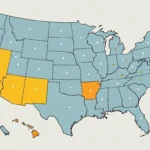
Does Arizona follow Pacific Standard Time?
Most of Arizona doesn’t observe Daylight Saving Time. During the summer, Arizona’s time matches the Pacific coast (PDT). During the winter, it matches Mountain Standard Time. This makes Arizona a frequent source of confusion.
What states are in the Pacific Standard Time timezone?
The primary states are California, Washington, and Oregon. Parts of Nevada and the Idaho panhandle also observe Pacific time.
How do I convert PST to EST?
The Eastern Standard Time (EST) timezone is three hours ahead of the Pacific Standard Time timezone. If it’s 12:00 PM in Los Angeles, it’s 3:00 PM in New York City.
Why was PST created?
The railroad industry in originally established timezones the late 19th century to prevent train collisions and create a standardized schedule for commerce. Before this, every city kept its own “local solar time.”
Is PST the same as GMT-8?
Functionally, yes. GMT (Greenwich Mean Time) is often used interchangeably with UTC in casual conversation, though UTC is the more precise atomic standard used by modern technology.
Take Control of Your Clock
The Pacific Standard Time timezone doesn’t have to be a source of stress. Once you recognize that the “Standard” in PST refers specifically to the winter months, and that the three-hour gap to the East Coast is your constant anchor, the math becomes second nature.
The single best action you can take right now is to audit your digital calendar settings. Ensure your “Primary Timezone” is set correctly and add “Pacific Time” as a permanent secondary time zone. This simple visibility will prevent 90% of all scheduling errors before they even happen.
Source: Britannica
Related Articles
- Pyntekvister: The Secret Decor Element That Instantly
- Master the Solo ET: The Ultimate Guide to Solo Entrepreneurship
- the Power of Wachappe
Editorial Note: This article was researched and written by the Cheeky Zebra editorial team. We fact-check our content and update it regularly. For questions or corrections, contact us.