
You’re sitting on your porch, enjoying a quiet evening, when you feel a sharp, needle-like prick on your ankle. You swat at it, seeing nothing but a tiny, dark speck hovering in the air. By the next morning, that tiny prick has transformed into a swollen, angry red bump that itches worse than any mosquito bite you’ve ever had.
Last updated: June 28, 2026
It’s infuriating because they are so small you can barely see them, yet they leave you feeling like you’ve walked through a minefield of irritation. You want to know if these tiny pests are actually biting you or if you’re just having an allergic reaction to the air. You need relief, and more importantly, you need them gone.
What is a Gnat Bite and Why Does It Happen?
When we ask do gnats bite, the answer is a frustrating “sometimes.” The term “gnat” is actually a broad category for many tiny flying insects. Most of the ones you see hovering over your overwatered houseplants—fungus gnats—don’t have the mouthparts to bite you at all. They are interested in fungi and organic matter, not your blood.
However, the “gnats” that leave you itchy are usually biting midges, black flies, or sand flies. Unlike mosquitoes, which use a needle-like proboscis to “sip” blood, biting gnats use tiny, saw-like mandibles to cut your skin. They create a small pool of blood and then lap it up.
This crude “cut and lap” method is why gnat bites often feel more painful initially than a mosquito bite. They inject saliva containing anticoagulants to keep your blood flowing, and it’s your body’s reaction to this protein that causes the swelling, redness, and intense itching that follows.
The “Hiking Trail” Scenario: Gnat Bites in Action
Imagine you are hiking near a creek on a humid afternoon. You notice a “cloud” of tiny specks following you. You don’t feel much at first, but within an hour, your hairline and the back of your neck are covered in small, crusty red dots.
This is a classic encounter with Black Flies (often called buffalo gnats). They are attracted to the carbon dioxide you exhale and the warmth of your body. Because they are so small, they can crawl into your hair or under the edges of your clothing before you even realize they are there.
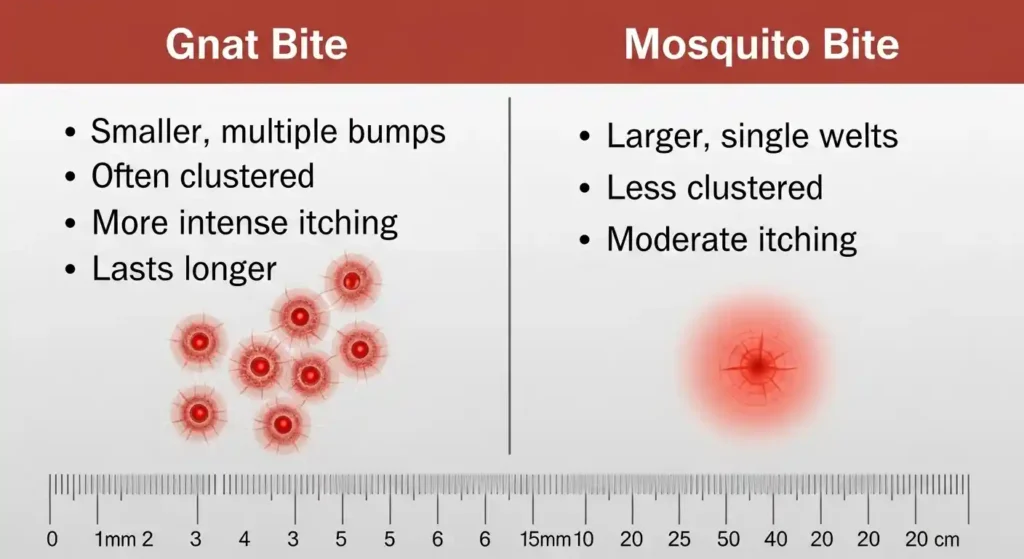
The result isn’t just one bite; it’s often a cluster. This “cluster effect” is a hallmark of gnat activity. Because they travel in swarms, if one finds a “feeding station” on your arm, others are likely to follow, leading to a concentrated area of irritation that can last for up to two sections.
Slope Game Unblocked: Master the High-Speed Descent Anywhere
How to handle an Infestation: Step-by-Step Instructions
If you have realized that gnats are biting you inside or around your home, you need a systematic approach to eliminate them. Following these steps will help you target the source rather than just swatting at the air.
-
Identify the Source: Look for damp areas. Biting midges and black flies need moisture to breed. Check clogged gutters, birdbaths, or overwatered garden beds.
-
Dry It Out: Once you find the damp spot, eliminate the standing water. If it’s a potted plant causing the issue, let the soil dry out completely between waterings.
-
Use a Physical Barrier: If you are being bitten indoors, check your window screens. Biting gnats are small enough to fit through standard 16-mesh window screening. You may need “no-see-um” mesh (a much finer weave) to keep them out.
-
Deploy Traps: For indoor gnats, a simple mixture of apple cider vinegar and a few drops of dish soap in a small bowl can attract and drown them.
-
Apply Repellent: When heading outdoors, use a repellent containing DEET or Picaridin. If you prefer natural options, oil of lemon eucalyptus has been shown to be effective against many biting fly species.
-
Treat the Bite: If you’ve already been bitten, wash the area with soap and water immediately. Apply a cold compress to reduce swelling and use a topical antihistamine or hydrocortisone cream to stop the itch.
Common Mistakes People Make
One of the biggest mistakes people make is misidentifying the insect. If you assume every tiny fly is a fruit fly, you’ll try to catch them with fruit traps. But biting midges aren’t interested in your bananas; they want your blood. Using the wrong bait means the population will continue to grow.
Another mistake is over-relying on “bug zappers.” While the satisfying pop of a zapper makes you feel like you’re winning the war, studies show that these devices often kill more beneficial insects (like moths or beetles) than the actual biting pests. In fact, the light can sometimes attract more gnats toward your patio than were there originally.
Finally, many people scratch the bites until they break the skin. Because gnat bites are essentially small open cuts, they are highly susceptible to secondary infections like cellulitis. If a bite starts to develop red streaks or you run a fever, you’ve moved past a simple “itch” and need medical attention.
Gnat Bites vs. Other Common Pests
it’s easy to confuse a gnat bite with a mosquito or flea bite. Use this table to help differentiate what is actually attacking you.
Pro Tips for Gnat Prevention
To truly stay bite-free, you have to think like a gnat. These insects are weak fliers. One of the most effective, chemical-free ways to keep them away from your patio is a high-velocity floor fan. If there’s even a moderate breeze, gnats can’t stabilize themselves enough to land on you and bite.
Another pro tip is to watch your wardrobe. Biting gnats are often attracted to dark colors like navy blue and black. Wearing light-colored, long-sleeved clothing makes you less visible to them. Some hikers even swear by “Permethrin-treated” clothing, which kills gnats on contact and stays effective through several washes.
Frequently Asked Questions
Do gnats bite humans or just pets?
Biting gnats are equal-opportunity feeders. They will bite humans, dogs, cats, and even livestock. In pets, look for redness or crusting around the ears and underbelly.
Why do some people get bitten more than others?
Gnats are attracted to carbon dioxide, lactic acid, and certain skin bacteria. If you have a higher metabolic rate or are sweating, you produce more “cues” that tell the gnat a meal is nearby.
Can gnat bites make you sick?
In most parts of North America, gnats are considered a “nuisance” pest and don’t frequently transmit diseases to humans. However, in other parts of the world, they can carry parasites or viruses, so it’s always best to avoid being bitten.
How long do gnat bites last?
While a mosquito bite might fade in a day, a gnat bite can remain itchy and visible for five to seven days. If you are particularly sensitive, the swelling can last even longer.
Does vinegar kill gnats?
Vinegar is an excellent attractant for fruit flies and some fungus gnats, but it’s not a “kill-on-contact” spray for biting gnats. It’s best used in a trap to drown them.
Final Takeaway on Gnat Bites
Answering the question do gnats bite is the first step in taking back your summer. Remember that while these tiny terrors are a major annoyance, they are manageable. The most important thing you can do right now is eliminate any standing water around your home. By removing their breeding grounds, you break the life cycle and ensure that your next evening outdoors is spent in peace, not in a cloud of itchy welts.
Source: World Health Organization
Related Articles
- What Is Adenoid Facies? Causes, Signs & Treatment
- Hypackle: The Ultimate Guide to Understanding Its Uses and Benefits
- Entertainment: A Deep Dive into VIP Box Me TV
Editorial Note: This article was researched and written by the Cheeky Zebra editorial team. We fact-check our content and update it regularly. For questions or corrections, contact us. For readers asking “Do gnats bite”, the answer comes down to the specific factors covered above.