You open Edgenuity for the third time this week. The unit is Earth and Space Science. The video just played — again — and you still don’t understand what the question is actually asking. You’ve Googled the exact wording. Nothing useful comes up. Your grade is sitting at 61% and the semester deadline is closing in.
Last updated: June 28, 2026
That frustration is real, and it’s more common than most teachers admit.
This article doesn’t hand you a cheat sheet. What it does is walk you through how Edgenuity Earth and Space Science actually works, which topics trip students up the most, how to find answers you can actually understand, and how to study smarter so you stop guessing and start knowing.
What Edgenuity Earth and Space Science Actually Covers
Edgenuity is a credit recovery and online learning platform used by thousands of schools across the US. The Earth and Space Science course is one of its most commonly assigned science tracks — especially for students in grades 9–10 or those recovering a credit.
The course is divided into major unit categories, typically including:
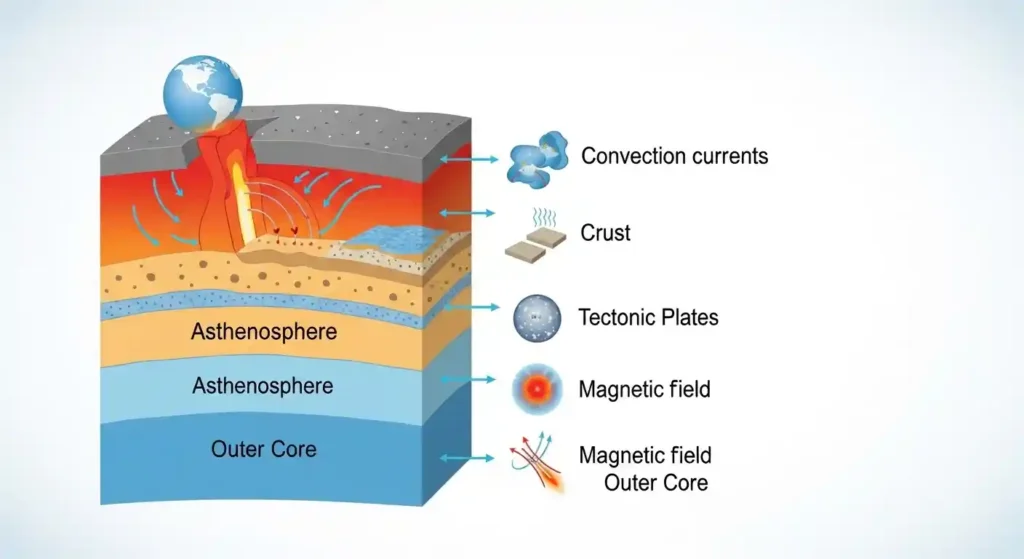
- Earth’s structure — layers of the Earth, plate tectonics, rock cycles
- Atmosphere and weather — weather patterns, climate systems, atmospheric layers
- Space science — the solar system, stars, galaxies, and Earth’s place in the universe
- Environmental science — natural resources, human impact, ecosystems
- Geology — landforms, erosion, soil science, earthquakes and volcanoes
Each unit includes instructional videos, guided notes, practice activities, quizzes, and cumulative tests. The scoring system counts quizzes, tests, and sometimes discussion posts — and yes, Edgenuity does track time spent on lessons.
Why Students Struggle with Edgenuity Earth and Space Science (A Real Scenario)
Meet Marcus. He’s a 10th grader who missed two weeks of school and got placed on Edgenuity for science credit recovery. He opens the unit on plate tectonics. The video explains convergent, divergent, and transform boundaries — but the quiz question says: “Which boundary type is most associated with deep-focus earthquakes?”
Marcus remembers something about earthquakes, but the video didn’t use those exact words. He picks convergent — but doesn’t know why.
That’s the core problem: Edgenuity teaches concepts in one vocabulary and tests in another. The videos summarize, but the questions probe deeper. Students who just watch videos and click through fail. Students who actively engage — pausing, taking notes, and connecting terms — pass.
The answer Marcus needed? Convergent boundaries (specifically subduction zones) cause deep-focus earthquakes because one plate slides beneath another into the mantle. That specific mechanism matters.
Magellan-szoros: Amit Feltétlenül Tudnod Kell
How to Actually Find the Right Answers: A Step-by-Step Approach
Don’t just rewatch the video. That alone won’t work. Here’s a reliable process:
- Read the question before watching the lesson. Scroll to the quiz first, skim the questions, then watch the video looking specifically for those answers. This changes everything.
- Pause at diagrams and labeled visuals. Edgenuity embeds the answers in graphics — rock cycle arrows, atmospheric layer labels, solar system comparisons. Screenshot or sketch them.
- Use the Edgenuity glossary. Every unit has a vocabulary section. These are the exact terms the quiz uses. Memorize definitions before taking any quiz.
- Cross-reference with Khan Academy. When a concept doesn’t click in Edgenuity’s video, go to Khan Academy and search the same topic. Their Earth science explanations are clearer and free.
- Use CK-12 for textbook-style reading. CK-12.org has an Earth and Space Science textbook aligned with standard US curriculum. Many Edgenuity questions come from concepts covered there.
- Take the practice activity seriously. Edgenuity’s practice activities aren’t optional fluff — they preview quiz question formats. Students who skip them consistently score lower.
- On tests, use process of elimination. Edgenuity tests are multiple choice. If you know two answers are wrong, your odds jump from 25% to 50%. Read every option before choosing.
Common Mistakes Students Make on Edgenuity Earth and Space Science
Mistake 1: Clicking through without reading. Edgenuity registers time-on-task. But clicking fast and not reading means you arrive at the quiz with zero retention. Slow down.
Mistake 2: Trusting random answer sites. Sites that claim to have “Edgenuity answers” circulate incorrect or outdated answers. Edgenuity updates its question banks regularly. Using a bad answer sheet can drop your score.
Mistake 3: Ignoring the written summaries. After each video, there’s usually a text summary. Most students skip it. That summary often contains exactly the phrasing used in quiz questions.
Mistake 4: Not resetting failed quizzes quickly. Edgenuity allows quiz retakes in many school configurations. If you fail, reset immediately while the content is fresh — don’t wait days.
Mistake 5: Treating all units as equally hard. Space science tends to be more conceptual and easier to memorize. Geology and atmospheric science are more diagram-heavy. Spend more time on the units that require visual understanding, not just memorization.
Edgenuity Earth and Space Science vs. Traditional Classroom Science
| Feature | Edgenuity (Online) | Traditional Classroom |
|---|---|---|
| Pacing | Self-paced, flexible | Fixed schedule |
| Lab work | Virtual simulations | Hands-on experiments |
| Teacher help | Limited, async messaging | Immediate, in-person |
| Quiz format | Auto-graded multiple choice | Varies (essays, labs, etc.) |
| Retake policy | Often allowed | Depends on teacher |
| Content depth | Broad overview, video-first | Can go deeper in discussion |
| Study resources | Built into platform | Textbooks, teacher notes |
The biggest real-world difference: Edgenuity rewards students who are self-directed. There’s no teacher noticing you’re confused. You have to flag your own gaps and fill them proactively.
Pro Tips for Scoring Higher on Edgenuity Earth and Space Science
Take handwritten notes. Research consistently shows handwriting improves retention better than typing. Even jotting down three key points per video lesson measurably increases quiz scores.
Use Quizlet for unit vocabulary. Search “Edgenuity Earth and Space Science [unit name]” on Quizlet — students and teachers have uploaded flashcard sets for most units. These are excellent for drilling definitions before quizzes.
Watch NASA and NOAA videos as supplements. For space science units especially, NASA’s YouTube channel has short explainer videos that cover the same content in more engaging ways.
Track your weak units. Keep a simple note on your phone: which units did you score below 70% on? Return to those first. Don’t spend time reviewing what you already know.
One angle most articles miss: Edgenuity’s grading weight isn’t equal across activity types. In most school configurations, tests count for 60–70% of your final unit grade, while practice activities count for far less. Prioritize test readiness over perfect activity scores.
Frequently Asked Questions
Does Edgenuity record you during quizzes?
Some schools enable webcam proctoring through Edgenuity, but most don’t. Check with your teacher or school. The platform itself logs time-on-task and can flag unusually fast completions.
Can you retake quizzes on Edgenuity Earth and Space Science?
In most school setups, yes — but retake availability is controlled by your teacher or administrator. Some schools allow unlimited retakes; others cap it at two. Ask your teacher before you start a quiz.
What is the passing grade for Edgenuity?
Most schools require a 60–70% to pass. But check your specific school’s Edgenuity policy — some require 80% on cumulative tests before unlocking the next unit.
How long does Edgenuity Earth and Space Science take to complete?
A full-credit course typically takes 90–120 hours of seat time, spread across a semester. Credit recovery versions can be shorter — sometimes 30–60 hours — depending on which units are assigned.
Are the Edgenuity Earth and Space Science answers the same for every student?
No. Edgenuity randomizes question order and sometimes answer choices. Even if two students take the same quiz simultaneously, the question sequence often differs. Answer lists shared online are unreliable for this reason.
The Real Takeaway
Edgenuity Earth and Space Science is manageable — but only if you work with the platform, not against it. The students who pass aren’t the ones who find shortcuts. They’re the ones who read the question before watching the video, use Quizlet to drill vocabulary, and treat the written summaries as gold.
Your one action right now: Open your lowest-scoring unit. Read the quiz questions first. Then rewatch just the sections that answer those questions. You’ll notice the difference immediately.
That’s how you stop guessing and start knowing.
Source: Britannica
Related Articles
- the Secrets of Shihuanuo Shampoo: A Revolutionary Hair Care Solution
- How Modern Lens Options Improve Vision After Cataract Surgery
- Eastern and Pacific Time Zone: How to Master the 3-Hour Gap
Editorial Note: This article was researched and written by the Cheeky Zebra editorial team. We fact-check our content and update it regularly. For questions or corrections, contact us. Knowing how to address edgenuity earth and space science answers early makes the rest of your plan easier to keep on track.