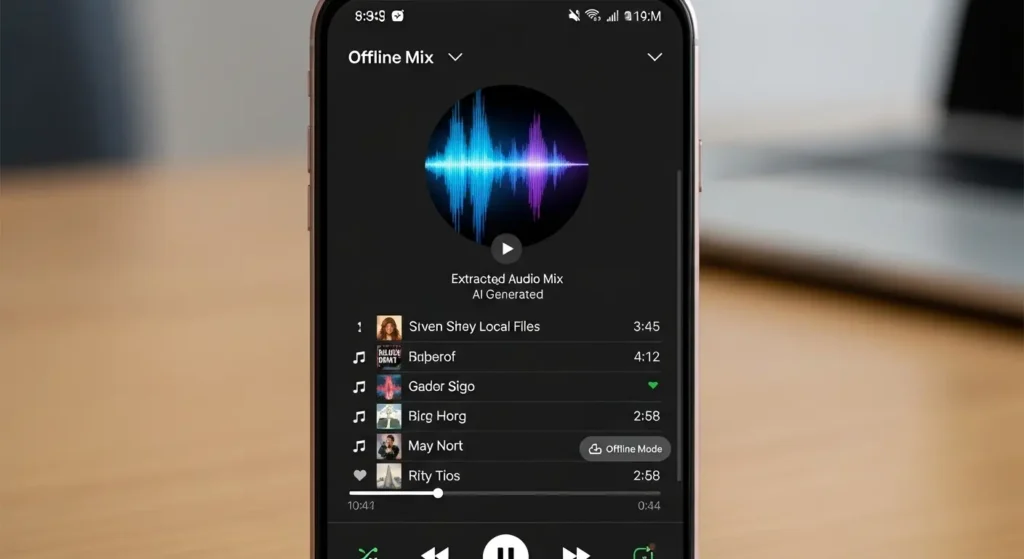
You’ve found that perfect lo-fi study mix or a rare indie live performance that isn’t available on Spotify. You want to listen to it on your morning run or during a flight where Wi-Fi is a distant dream. But every time you try to find a way to take that audio with you, you’re met with sketchy websites, aggressive pop-up ads, and the constant fear of a virus hitting your device. It’s frustrating when you just want your music without the digital headache. You deserve a clear, safe path to building your offline library.
Last updated: June 28, 2026
This guide is designed to cut through the noise. We are going to look at how to navigate the world of YouTube to MP3 conversion without compromising your computer’s health or your own ethics. By the end of this, you’ll know exactly how to get the highest fidelity sound while staying on the right side of the law and technology.
What is YouTube to MP3 Extraction?
In plain English, YouTube to MP3 is the process of stripping the video component away from a link and saving only the audio track as a digital file. Think of it like recording a song off the radio back in the day, but with much higher precision. An MP3 is a “lossy” format, meaning it shrinks the file size to make it easy to store on your phone or laptop while keeping the sound quality decent for most listeners.
When you use a converter, you aren’t actually “downloading” from a server in the traditional sense. Instead, the software or website communicates with the video platform, captures the audio stream, and re-encodes it into a format your music player understands. It’s a bridge between a streaming video and a local audio file.
YouTube to MP3 Explained with a Real-World Scenario
Let’s look at Sarah, a community theater director. She finds a royalty-free sound effect of a thunderstorm on a video channel that’s perfect for her upcoming play. However, the theater’s basement has zero internet connection. Sarah can’t rely on a streaming link; she needs that file sitting on her laptop’s desktop, ready to be triggered by the soundboard software.
By using a YouTube to MP3 tool, Sarah enters the URL of the thunderstorm video. The tool processes the data, discards the visuals of lightning bolts, and hands Sarah a clean, 320kbps MP3 file. She can now move this file to a USB drive, edit it in a sound program, or play it back on any device without ever needing a signal again. This is the practical power of audio extraction—it turns ephemeral streams into permanent tools.
Cowboys Kendall Fuller Free Agency: Is He the Missing Piece?
How to Convert Audio: Step-by-Step Instructions
If you are ready to move your favorite tracks offline, follow these steps to ensure you get a clean file and avoid the typical pitfalls of the internet.
-
Find Your Source: Open the video you want to convert. Copy the full URL from your browser’s address bar. Make sure you are on the actual video page, not a playlist page, to avoid errors.
-
Choose a Reliable Tool: Opt for a well-reviewed desktop application rather than a browser-based site if you plan on doing this often. Desktop software is generally less likely to bombard you with malicious redirects.
-
Select the Format and Quality: Most tools default to MP3. Look for the “bitrate” settings. Always choose 320kbps if available. This is the highest quality MP3 can offer. If you choose 128kbps, the music may sound “tinny” or muffled.
-
Paste and Analyze: Paste your link into the converter’s search bar. Hit the “Analyze” or “Convert” button. The software will fetch the video data.
-
Download and Organize: Once the conversion finishes, save the file to a specific folder on your computer. Immediately right-click the file and “Get Info” or “Properties” to edit the metadata (Artist name, Album, etc.) so it doesn’t get lost in your library.
Common Mistakes People Make
The biggest blunder is clicking the “Big Green Download Button” on conversion websites. Often, the actual download link is a tiny text string, while the giant, flashing green button is a disguised advertisement for a “PC Cleaner” or a “Browser Extension” you don’t want. Always hover your mouse over a button to see the destination URL before clicking.
Another mistake is ignoring the legality and copyright of the content. Many people assume that because a video is public, it’s free to take. This isn’t true. Converting a major label’s music video is a violation of Terms of Service. However, converting your own uploaded videos, Creative Commons content, or public domain lectures is generally the “safe zone” for personal use.
Lastly, users often convert files multiple times. If you convert a low-quality 240p video into a 320kbps MP3, it won’t magically sound better. The “source quality” is the ceiling. You can’t extract gold from lead; always start with a high-definition video source to get the best audio.
YouTube to MP3 vs. Screen Recording
While both methods get you the audio, they are fundamentally different in terms of quality and effort.
| Feature | YouTube to MP3 Converter | Screen/Audio Recording |
| Audio Quality | Direct digital extraction (Better) | Analog loopback (Potential loss) |
| Speed | Seconds to minutes | Real-time (Takes as long as the song) |
| Metadata | Often pulls title/thumb automatically | You must manually name everything |
| Ease of Use | One-click pasting | Requires setting up input/output levels |
| Risk Factor | High (Adware on some sites) | Low (Handled locally on your PC) |
Pro Tips and Best Practices for High-Fidelity Sound
To get the most out of your YouTube to MP3 experience, you should look beyond just the “download” button. One “secret” insight that many people miss is checking the Audio Codec of the original video. YouTube usually streams audio in a format called Opus or AAC. When you convert these to MP3, you are “transcoding”—which can slightly degrade quality. If your player supports M4A (AAC), choose that instead of MP3. It’s a more modern, efficient format that often sounds better at lower file sizes.
-
Use an Ad-Blocker: If you must use a website-based converter, ensure you have a solid ad-blocker active. This prevents 90% of the “malware” risks associated with these services.
-
Batch Processing: If you are archiving a long series of lectures, find a tool that allows “Batch Downloads.” This lets you paste ten links at once and walk away while the computer does the work.
-
Check the Length: Be wary of videos over 2 hours. Many free converters will fail halfway through a 5-hour “Rain Sounds” video. For long-form content, desktop-based software is a necessity.
Frequently Asked Questions
Is it legal to convert YouTube to MP3?
Generally, it’s against the platform’s Terms of Service to download content without a “download” button provided by them. For personal use of copyrighted music, it sits in a legal “gray area” in many regions, but distributing those files or using them for commercial purposes is a definitive copyright violation.
Will converting a video to MP3 give my computer a virus?
The conversion process itself doesn’t. However, the websites that host these tools often use “malvertising.” To stay safe, never download an.exe file when you are expecting an.mp3, and never grant a conversion site “Notification” permissions in your browser.
Why is my MP3 quality so low?
This usually happens because the original video was uploaded in low resolution (like 360p) or the converter is compressing the file to save server space. Always look for a “HQ” or “320kbps” setting in your converter.
Can I do this on my iPhone or Android?
Yes, but it’s trickier. Mobile browsers often block direct downloads. Most users find it easier to convert on a desktop and then sync the files to their mobile devices via cloud storage or a cable.
What is the best bitrate for MP3?
For music, 320kbps is the gold standard for MP3. For spoken word podcasts or lectures, 128kbps is more than enough and will save significant storage space on your device.
The Future of Your Offline Library
The world of digital media is constantly shifting, but the desire to own your media remains. Mastering the YouTube to MP3 process isn’t just about grabbing a song; it’s about media literacy. It’s about knowing the difference between a high-quality stream and a compressed file, and knowing how to protect your hardware while building a collection that doesn’t disappear when the internet goes down.
Remember, the quality of your library depends on the quality of your source. Don’t settle for “good enough” audio. Your next step is to audit your current music folder: delete those old, crunchy 128kbps files and replace them with high-quality 320kbps versions using the steps we discussed today. Happy listening!
Source: Wired
Related Articles
- Colorado US Time Zone: Everything You Need to Know
- America Arizona Time Zone: Why AZ Never Changes Clocks
- Why the ywmlfz 48w cordless Is Changing the Game for
Editorial Note: This article was researched and written by the Cheeky Zebra editorial team. We fact-check our content and update it regularly. For questions or corrections, contact us.