You are sitting in the testing center, the clock is ticking, and you finally reach the reading section. You encounter the infamous solar panels TEAS passage, and suddenly, the technical jargon starts to blur. You know that getting into your dream nursing program hinges on this score, yet your brain feels like it’s short-circuiting. It’s frustrating to feel prepared for anatomy but completely stumped by a text about renewable energy. You need more than just “reading more”; you need a tactical breakdown of exactly how this passage is structured.
Last updated: June 28, 2026
The Struggle with the Solar Panels TEAS Passage Explained
The solar panels TEAS passage is a staple of the ATI TEAS reading section designed to test your ability to synthesize technical information. This specific text usually explores the history, mechanics, and environmental impact of photovoltaic technology. It isn’t just about whether you know what a solar panel is; it’s about whether you can identify the author’s intent, find the main idea, and distinguish between facts and opinions within a dense, informational framework.
Many students fail this section because they get bogged down in the science. You don’t need to be an engineer to pass this. You need to be a detective. The passage serves as a filter for nursing schools to see if you can process complex instructions or research—skills you will use daily when reading patient charts or medical journals. This article solves that “mental block” by showing you exactly where the traps are hidden.
What is the Solar Panels TEAS Passage?
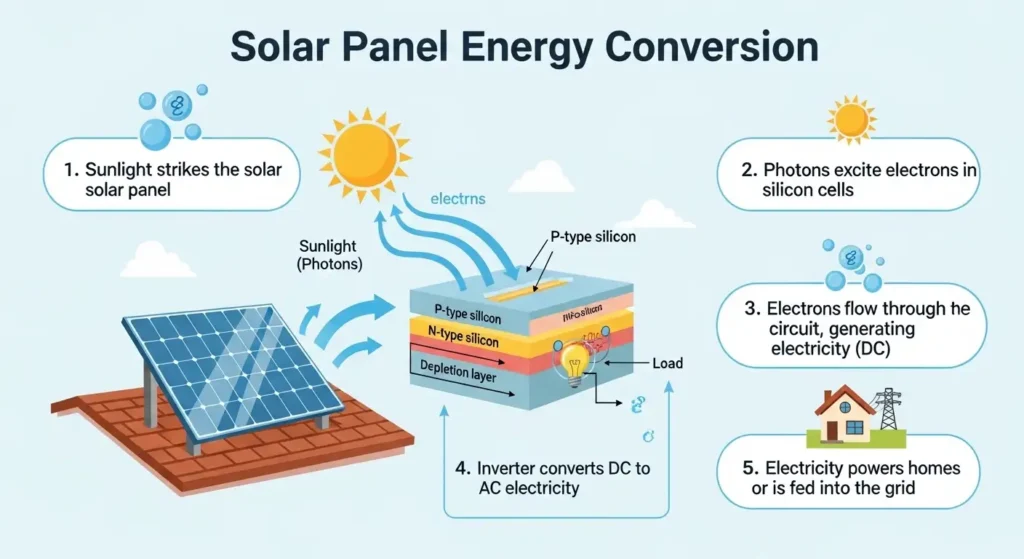
In plain English, the solar panels TEAS passage is an expository or informative text. It generally follows a logical progression: the birth of solar technology, how light energy converts to electricity, and the modern-day benefits or drawbacks. The test creators use this topic because it allows them to insert numbers, dates, and technical processes that look intimidating but are actually quite simple if you know how to skim for “signpost” words.
The passage usually mentions the “photovoltaic effect.” Don’t let that term scare you. It simply means “light turning into electricity.” The goal of the TEAS is to see if you can find that definition within the text without using outside knowledge. Remember, the answer is always in the passage, even if it feels buried under layers of academic prose.
Quizizz Time Limit Guide: How to Master Timer Settings
The Solar Panels TEAS Passage: A Real-World Scenario
Imagine you are reading a brochure for a new hospital wing that will be powered entirely by the sun. The brochure explains that the silicon cells in the panels react to photons. A question on the TEAS might ask: “What is the primary material used in the panels mentioned in the text?”
If you remember from a science show that some panels use gallium, you might be tempted to pick that. However, if the passage only mentions silicon, gallium is the wrong answer. This is the “outside knowledge trap.” The solar panels passage is a test of your loyalty to the text provided on the screen, not your general knowledge of green energy.
Step-by-Step Instructions to Analyze the Passage
When you encounter the solar panels TEAS passage during your exam, follow this tactical sequence to ensure you don’t miss easy points.
-
Read the Questions First: Before touching the passage, look at the five or six questions associated with it. This primes your brain to “hunt” for specific keywords like “efficiency,” “cost,” or “silicon.”
-
Identify the Passage Type: Is it telling a story (narrative), trying to convince you of something (persuasive), or giving you facts (expository)? Most solar panel passages are expository.
-
Find the Topic Sentence: The first or second sentence of the first paragraph usually holds the key to the “Main Idea” questions. Highlight the subject and the verb to stay focused.
-
Annotate Transitions: Look for words like “however,” “consequently,” and “and.” These are the pivots. If a question asks about the “drawbacks” of solar energy, look immediately after the word “however.”
-
Distinguish Fact from Opinion: If the text says, “Solar panels are the best way to save the planet,” that’s an opinion. If it says, “Solar panels can reduce electricity bills by 30%,” look for the source or data—that’s a fact.
-
Summarize Paragraphs: After reading each paragraph, quickly tell yourself (in five words or less) what you just read. For example: “Paragraph 2: How panels work.”
Common Mistakes People Make
The most frequent error is over-reading. Students spend four minutes reading the passage word-for-word, only to realize they didn’t retain anything because they were too stressed. You should be “scanning” for structure rather than “reading” for pleasure.
Another pitfall is the “Inference Trap.” The TEAS often asks what can be “inferred.” An inference must be supported by the text. If the passage says solar panels are expensive to install but save money over 20 years, you can infer that they are a long-term investment. You can’t infer that “everyone should buy them,” because that’s a value judgment not explicitly supported by the data.
Lastly, many testers ignore the source or bibliography at the bottom. Sometimes, a question will ask about the “credibility” of the passage. If the source is a solar panel manufacturer’s blog, the passage might be biased. If it’s from a peer-reviewed science journal, it’s likely more objective.
Solar Panels TEAS Passage vs. Other Passage Types
Understanding the difference between the types of texts you’ll face helps you switch your “brain mode” quickly.
| Feature | Expository (Solar Panels) | Persuasive (Opinion Piece) | Narrative (Story) |
| Primary Goal | To inform or explain. | To convince or move to action. | To entertain or tell a sequence. |
| Tone | Objective and factual. | Subjective and emotional. | Descriptive and creative. |
| Key Indicators | Statistics, dates, “how-to.” | “Should,” “must,” “best,” “worst.” | Characters, dialogue, plot. |
| Common Question | “What is the sequence of X?” | “What is the author’s stance?” | “What is the theme?” |
Pro Tips for TEAS Reading Mastery
One insight most articles miss is the “Dictionary Entry” trick. Occasionally, the solar panels TEAS passage will be followed by a question asking you to choose the correct definition of a word like “harness” as used in the text. Don’t choose the definition you know from memory (like a horse’s harness). Instead, go back to the sentence. If it says “harness the sun’s power,” replace “harness” with your answer choices to see which one fits the context of “capturing” or “utilizing.”
Another best practice is to ignore your own bias. You might hate the look of solar panels or love the idea of green energy. The TEAS doesn’t care. If the passage says solar panels are “inefficient in cloudy climates,” and you live in a cloudy place with great solar power, you must still answer based on the passage’s claim of inefficiency. The text is your only reality.
Frequently Asked Questions
Is the solar panels passage on every TEAS test?
Not every single one, as ATI uses a rotating bank of questions. However, it’s one of the most frequently reported “scientific” passages, so preparing for it’s highly recommended.
How do I find the “Main Idea” quickly?
Read the first paragraph and the last paragraph. Usually, the author introduces the concept at the start and summarizes their main point at the end. The middle is just “supporting detail” fluff.
What does “author’s purpose” mean in this context?
For the solar panels passage, the purpose is almost always to inform. If the author starts listing why you should buy them today, the purpose shifts to to persuade.
Are there “sequencing” questions for this passage?
Yes. You might be asked to order the steps of how a solar cell produces electricity. Look for transition words like “first,” “then,” and “finally” to get the order right.
Can I use a calculator for the numbers in the passage?
While you have a calculator for the math section, you usually don’t need it for reading. The numbers are there to test your ability to locate data, not to perform complex arithmetic.
Conclusion: Your Action Plan for Success
Conquering the solar panels TEAS passage is a matter of strategy over raw knowledge. By identifying the passage type, hunting for keywords, and refusing to let your outside knowledge cloud your judgment, you can turn this intimidating text into easy points for your score report. The ability to dissect complex information is exactly what will make you a great nurse one day.
Your next step: Take a practice reading quiz today and focus specifically on scientific or technical passages. Set a timer for 10 minutes and practice the “scan and hunt” method instead of reading every word.
Source: Britannica
Related Articles
- Kubik Geneve: The Watch Brand Worth Knowing
- Fesbuka: The Ultimate Guide to Understanding This Rising
- Ombudsmänner Explained: The Hidden Protectors of Fairness
Editorial Note: This article was researched and written by the Cheeky Zebra editorial team. We fact-check our content and update it regularly. For questions or corrections, contact us.