You are staring at your calendar, sweating. You have a massive Zoom call with a client in San Francisco, a flight to catch in San Diego, or a live broadcast starting in Los Angeles. You know the East Coast is ahead, but is it two hours or three? Did the clocks just change?
Last updated: June 28, 2026
Nothing kills your professional momentum faster than showing up an hour early—or worse, an hour late—because of a simple math error. You don’t need a lecture on Earth’s rotation; you need to know exactly what time it’s on the West Coast right now so you can stop stressing. This guide is your definitive cheat sheet for the California time zone, ensuring you never miss a beat.
What is the California Time Zone?
California operates within the Pacific Time Zone, but it isn’t a static number all year round. In the United States, time zones are dynamic because of Daylight Saving Time. For most of the year, California follows Pacific Daylight Time (PDT), and for the shorter winter stretch, it shifts to Pacific Standard Time (PST).
The “Standard” offset is UTC-8, meaning California is eight hours behind Coordinated Universal Time. When the state shifts to Daylight Time in the spring, it moves to UTC-7. This one-hour jump is the source of 90% of scheduling errors. If you are trying to coordinate with a team in London or Tokyo, knowing whether California is at -7 or -8 is the difference between a successful meeting and a “Where is everyone?” email.
The California Time Zone Explained with a Real Scenario
Let’s look at a “Three-City Tangle.” Imagine you are a freelance designer based in New York (Eastern Time). You have a partner in Chicago (Central Time) and a major client in Los Angeles (Pacific Time).
If the client says, “Let’s meet at 10:00 AM California time,” your brain has to perform a multi-step calculation. While you are sipping your 1:00 PM post-lunch coffee in Manhattan, your partner in Chicago is just finishing their noon meeting. Meanwhile, your client in LA is likely just sitting down with their first cup of coffee.
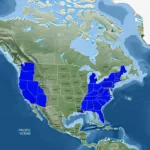
The California time zone acts as the “anchor” for the West Coast. Because California has the largest economy and population in the region, the entire Pacific strip—including Washington, Oregon, and Nevada—effectively follows its lead. If you can master the California clock, you’ve mastered the entire Western United States.
A Complete Guide to Understanding Senior Living Options
Step-by-Step Instructions: How to Calculate California Time
If you find yourself constantly second-guessing the math, use this foolproof mental framework. Follow these steps to determine the time in California from anywhere in the continental U.S.
-
Identify Your Starting Point: Determine your current local time and your specific time zone (Eastern, Central, or Mountain).
-
Use the “Subraction Rule”: If you are moving from East to West, you subtract hours.
-
From Eastern Time: Subtract 3 hours.
-
From Central Time: Subtract 2 hours.
-
From Mountain Time: Subtract 1 hour.
-
-
Check the Date: Is it between the second Sunday in March and the first Sunday in November? If yes, California is in Daylight Time (PDT). If it’s winter, they are in Standard Time (PST).
-
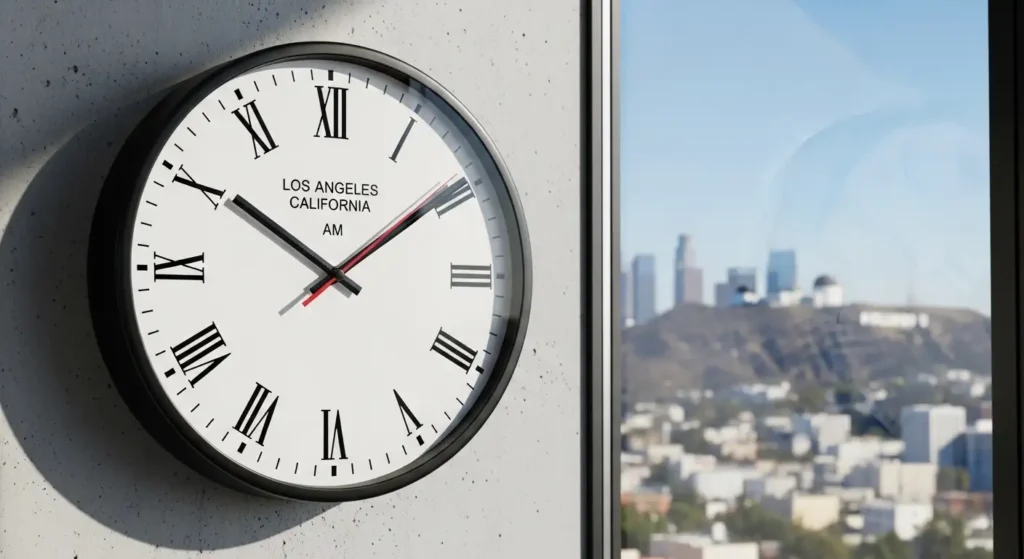
Verify the Shift: Most digital devices like iPhones and Androids handle this automatically, but if you are using an analog wall clock, always double-check the “Spring Forward, Fall Back” calendar status.
-
Confirm with the Anchor: If it’s noon in New York, it’s always 9:00 AM in California, regardless of the season, because the entire country (mostly) shifts their clocks together.
Common Mistakes People Make
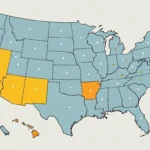
The most frequent error is the “Arizona Trap.” While California shifts its clocks twice a year, most of Arizona stays on Standard Time year-round. This means for half the year, California and Arizona are on the same time, and for the other half, they are an hour apart. If you are traveling between Los Angeles and Phoenix, never assume your phone will sync immediately—check it manually.
Another mistake is the Standard/Daylight naming convention. Many people use “PST” as a catch-all term for California time. However, if you write “10:00 AM PST” in a formal contract during the summer, you are technically referring to a time that’s one hour off from the actual local time (PDT). To be safe, just use “PT” (Pacific Time) to cover both bases.
Finally, don’t forget the 2:00 AM transition. On the nights when the time changes, it happens at 2:00 AM local time. If you have a flight at 4:00 AM on a “Spring Forward” Sunday, you effectively lose an hour of sleep and prep time. Many travelers have missed early morning flights at LAX because they didn’t realize the “new” 4:00 AM was actually the “old” 3:00 AM.
California vs. Other Major U.S. Time Zones
To make your life easier, use this comparison table to see how the California time zone stacks up against its neighbors.
| If it’s 12:00 PM in California (PT) | Then it’s… | Time Zone Name | UTC Offset (Standard/Daylight) |
| Phoenix, AZ | 12:00 PM or 1:00 PM* | Mountain Standard | UTC-7 (No DST) |
| Denver, CO | 1:00 PM | Mountain Time | UTC-7 / UTC-6 |
| Chicago, IL | 2:00 PM | Central Time | UTC-6 / UTC-5 |
| New York, NY | 3:00 PM | Eastern Time | UTC-5 / UTC-4 |
| Honolulu, HI | 9:00 AM or 10:00 AM | Hawaii-Aleutian | UTC-10 (No DST) |
| London, UK | 8:00 PM | GMT / BST | UTC+0 / UTC+1 |
*Arizona doesn’t observe Daylight Saving Time, so it matches California during the summer months.
Pro Tips for Managing Pacific Time
If you work remotely or travel frequently, set your secondary clock on your computer. Both Windows and macOS allow you to add a second clock to your taskbar. Label it “CA Time” or “West Coast.” This removes the need for mental math entirely.
For those using Google Calendar or Outlook, you can display two time zones side-by-side in your daily view. This is a big deal for avoiding “calendar chicken,” where two people keep suggesting times that are outside of each other’s working hours.
The “hidden” insight many miss is the “Golden Hour” of productivity. If you are on the East Coast working with a California team, your 3:00 PM to 5:00 PM is their most productive morning stretch. Conversely, if you are in California, your 8:00 AM to 10:00 AM is the only time you’ll catch East Coast colleagues before they head into their afternoon slump or end-of-day meetings. Front-load your cross-coastal communications into this window for the fastest response times.
Frequently Asked Questions
Does all of California use the same time zone?
Yes, the entire state of California follows the Pacific Time Zone. Unlike some states like Oregon or Idaho, which are split between two zones, California is unified from the Oregon border down to Mexico.
When does California change its clocks?
California follows the federal schedule: clocks “spring forward” one hour on the second Sunday in March and “fall back” one hour on the first Sunday in November.
Is California always 3 hours behind New York?
Yes, the 3-hour gap between the California time zone and the Eastern Time Zone remains constant throughout the year because both regions observe Daylight Saving Time on the same schedule.
What happened to the plan to stop changing clocks in California?
In 2018, California voters passed Proposition 7, which gave the legislature the power to change the time zone. However, it requires a two-thirds vote in the state legislature and, more importantly, federal approval from Congress, which has not yet happened.
How do I write California time for international audiences?
When communicating globally, it’s best to use the UTC offset. For example: “The webinar starts at 9:00 AM PT (UTC-7).” This avoids confusion over whether you are currently in “Standard” or “Daylight” mode.
The Takeaway: Control the Clock
The California time zone doesn’t have to be a source of anxiety. Whether you are navigating the UTC-8 of winter or the UTC-7 of summer, the three-hour rule relative to the East Coast is your best friend. The key to never missing an appointment is to stop relying on your memory and start using your tools.
Source: Lonely Planet
Related Articles
- Citi Stadium NYC: The Ultimate Fan Guide to Citi Field
- How Long Does It Take to Boil Potatoes? Complete Guide
- Is Stardew Valley Cross Platform? Everything Players Need
Editorial Note: This article was researched and written by the Cheeky Zebra editorial team. We fact-check our content and update it regularly. For questions or corrections, contact us.