If you’ve ever noticed a child who constantly breathes through their mouth, has a slightly open jaw, or looks like their face has a long, narrow shape — you may have been looking at adenoid facies without even knowing it. This condition is more common than most people realize, and understanding it early can make a real difference in a child’s development.
What Is Adenoid Facies?
Adenoid facies is a set of facial changes that develop when a child breathes through their mouth for a long time — usually because enlarged adenoids are blocking the nasal airway. The word “facies” simply means facial appearance in medical language.
When a child can’t breathe properly through the nose, the body adapts. Over time, those adaptations leave visible marks on the face, jaw, and teeth. It’s not just a cosmetic concern — it can affect speech, sleep, dental health, and even cognitive development.
This condition typically shows up during early childhood, when the bones of the face are still growing and highly responsive to physical forces like airflow and muscle pressure.
What Causes Adenoid Facies?
The main cause is — as the name suggests — enlarged adenoids. Adenoids are small lumps of lymphatic tissue sitting at the back of the nasal cavity. In children, they tend to grow in response to infections and can sometimes become so large that they block the airway.
But enlarged adenoids aren’t the only reason a child might develop this condition. Other causes include:
- Chronic nasal congestion from allergies or repeated colds
- Deviated nasal septum making it harder to breathe through the nose
- Nasal polyps obstructing the airway
- Habitual mouth breathing even without a clear physical blockage
- Tonsil enlargement contributing to upper airway resistance
The key factor in all of these is the same: long-term mouth breathing during a period when the face is still developing. The longer it goes on, the more pronounced the facial changes become.
Kubik Geneve: The Watch Brand Worth Knowing
The Classic Signs of Adenoid Facies
Doctors and dentists often recognize this condition at a glance. The facial features associated with adenoid facies tend to follow a consistent pattern.
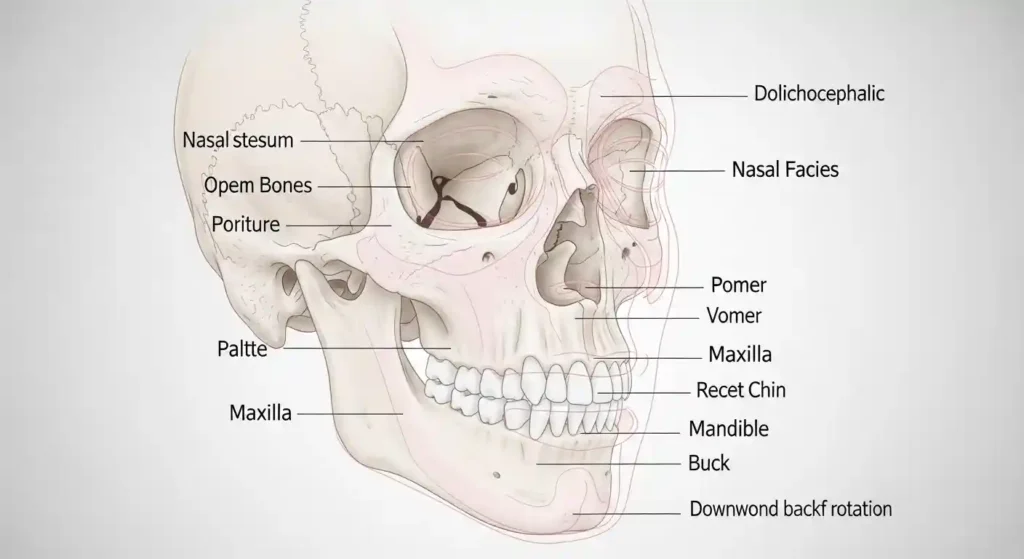
Facial and Dental Features
- Long, narrow face
- Open mouth at rest (the child rarely closes their lips naturally)
- High, arched palate (the roof of the mouth is narrower and more vaulted)
- Crowded or misaligned upper teeth (malocclusion)
- Protruding upper front teeth
- Receding chin or underdeveloped lower jaw
- Flat or droopy cheeks
Behavioral and Functional Signs
- Snoring during sleep
- Restless sleep or sleep apnea
- Frequent dry mouth and bad breath
- Nasal voice or speech difficulties
- Difficulty paying attention or daytime tiredness (often confused with ADHD)
- Repeated ear or sinus infections
If you spot several of these signs together in a child, it’s worth bringing up with a pediatrician, ENT specialist, or orthodontist.
How Is Adenoid Facies Diagnosed?
There’s no single test for this. Diagnosis usually comes through a combination of clinical observation, patient history, and sometimes imaging.
A doctor will typically look at:
- The child’s breathing pattern at rest
- Facial structure and dental alignment
- The size of the adenoids (often using a nasal endoscope or X-ray)
- Sleep history and any reported snoring
In many cases, an ENT (ear, nose, and throat specialist) works alongside an orthodontist to get a full picture of how the condition is affecting both the airway and the developing face.
Treatment Options
The good news is that adenoid facies is very treatable — especially when caught early. Treatment usually targets both the underlying cause and the resulting facial changes.
Surgical Treatment
Adenoidectomy is the most common surgical fix. This is a procedure to remove the enlarged adenoids. It’s a routine surgery, typically done under general anesthesia, and recovery is usually quick. In many children, removing the adenoids immediately restores nasal breathing and stops the cycle of mouth breathing.
If the tonsils are also enlarged and contributing to the problem, a tonsillectomy may be done at the same time.
Orthodontic and Dental Treatment
Once the airway issue is addressed, the facial and dental problems may need separate attention. Options include:
- Palatal expanders to widen the narrow upper jaw
- Braces or aligners to correct tooth alignment
- Myofunctional therapy — exercises that retrain the tongue, lips, and facial muscles to function correctly
These treatments work best when started early, while the face is still growing.
Non-Surgical Management
For milder cases or children who aren’t surgical candidates:
- Nasal steroid sprays to reduce adenoid swelling from allergies
- Antihistamines or allergy treatment if the root cause is allergic
- Breathing exercises and mouth-tape techniques (under medical supervision)
- Sleep positioning changes to encourage nasal breathing
Pros and Cons of Treating Adenoid Facies Early
Pros
- Restores proper nasal breathing before facial bones fully set
- Improves sleep quality and daytime energy
- Reduces risk of dental complications and the need for major orthodontic work later
- Can improve speech and reduce ear infections
- Supports better cognitive development and focus in school
Cons
- Adenoidectomy carries the usual surgical risks (though rare)
- Orthodontic treatment can be lengthy and costly
- Some facial changes that occurred early may be permanent if treatment is delayed too long
- Children may resist wearing appliances or doing exercises consistently
Common Mistakes Parents Make
Waiting too long. The most common mistake is assuming the child will “grow out of it.” Mouth breathing during active facial development causes real, structural changes — and the window for easy correction is limited.
Treating only the teeth. Some families go straight to braces without addressing the breathing issue first. If mouth breathing continues, orthodontic treatment may relapse.
Missing the sleep connection. Adenoid facies and sleep-disordered breathing are closely linked. Parents often don’t connect a child’s poor sleep or behavioral issues to a breathing problem.
Ignoring allergies. If allergies are causing chronic congestion and that’s driving the mouth breathing, treating the allergy is essential — not optional.
Best Practices for Managing This Condition
- Get an evaluation from both an ENT and a pediatric dentist or orthodontist
- Address the breathing obstruction before starting dental correction
- Start treatment as early as possible — ideally before age 9 or 10
- Follow through with myofunctional therapy after any surgical or dental work
- Monitor the child’s sleep quality as a key indicator of improvement
- Stay on top of allergy management if that’s a contributing factor
Conclusion
Adenoid facies isn’t just about how a child looks — it’s a visible sign of an underlying breathing problem that deserves real attention. The facial changes happen gradually, which is exactly why they’re so easy to miss until they’ve already progressed.
The encouraging part is that with the right care — whether that’s surgery, orthodontics, or a combination — most children respond very well. The earlier you catch it, the more options you have and the better the outcome tends to be.
If you suspect your child might be affected, don’t wait. A conversation with your pediatrician or a referral to an ENT is a simple first step that could make a significant difference down the road.
Frequently Asked Questions
1. At what age does adenoid facies typically develop?
It usually develops between ages 3 and 12, when the face is actively growing. The earlier mouth breathing starts and the longer it continues, the more pronounced the changes become.
2. Can adenoid facies be reversed?
If caught early enough — before the facial bones have fully matured — many of the changes can be corrected or significantly improved with orthodontic and surgical treatment. Changes in older teens or adults are harder to reverse without more involved procedures.
3. Does every child with enlarged adenoids develop adenoid facies?
No. Not every child with enlarged adenoids will develop noticeable facial changes. It depends on how severely the airway is blocked, how long the mouth breathing continues, and the child’s individual growth pattern.
4. Is adenoid facies the same as mouth breathing face?
They’re closely related. “Mouth breathing face” is a colloquial term that describes the same general set of features. Adenoid facies is the clinical term used when those features are linked specifically to adenoid-related obstruction.
5. Can adults develop adenoid facies?
Adults can have residual facial features from untreated childhood adenoid facies, but the condition itself develops during childhood growth. Adults with chronic nasal obstruction may experience some related dental or jaw changes over time, though it’s less dramatic than in growing children.