You are five minutes away from your most important Zoom call of the month. You’ve prepped your slides, the coffee is hot, and you’re logged in—only to find the virtual room empty. Suddenly, it hits you. Did they mean 10:00 AM your time or their time? If you are traveling to the Rockies or working with a team in Denver, the Colorado time zone can be a moving target that leaves you feeling frustrated and unprofessional.
Missing a flight because of a clock shift or waking up your boss with a 6:00 AM phone call is a mistake you only want to make once. This guide is designed to fix that confusion forever. We will break down exactly how the clock works in the Centennial State so you never have to second-guess your calendar again.
What is the Colorado Time Zone?
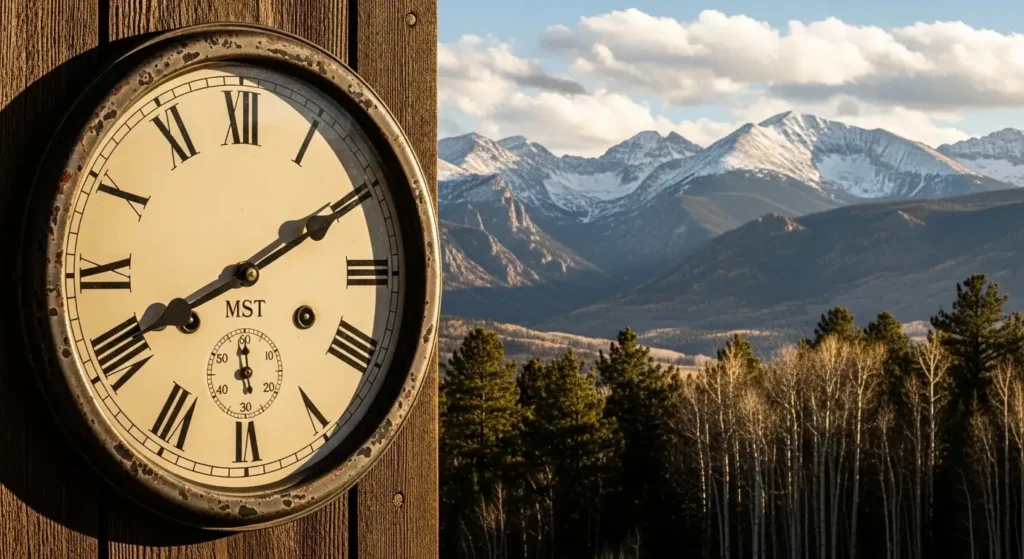
In plain English, Colorado is located in the Mountain Time Zone. This is the slice of the United States that sits between the Midwest (Central Time) and the West Coast (Pacific Time). It acts as the backbone of the Rocky Mountain region.
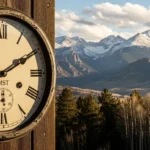
However, it isn’t just one static setting. Colorado observes Daylight Saving Time. This means for half the year, the state follows Mountain Standard Time (MST), and for the other half, it follows Mountain Daylight Time (MDT).
When you hear someone mention the Colorado time zone, they are usually referring to Mountain Time in general. The state is exactly seven hours behind Coordinated Universal Time (UTC-7) during the winter and six hours behind (UTC-6) during the summer.
The Colorado Time Zone Explained with a Real Scenario
Let’s look at a scenario that happens every year in early March. Imagine you are a remote worker living in New York (Eastern Time), and your main client is based in Boulder, Colorado.
On a Friday in March, your client says, “Let’s touch base at 2:00 PM my time on Monday.” You know that Colorado is usually two hours behind you, so you plan for a 4:00 PM call. However, Sunday is the day the clocks “spring forward” for Daylight Saving Time.
Because Colorado shifts its clocks simultaneously with most of the U.S., the two-hour gap remains the same. But if you were calling from a place that doesn’t change clocks—like most of Arizona or parts of international locations—your 2:00 PM appointment would suddenly be an hour “off” from what you expected. Colorado’s commitment to the seasonal shift is the most common reason people miss their marks.
Citi Stadium NYC: The Ultimate Fan Guide to Citi Field
How to Calculate the Time in Colorado
If you are trying to figure out what time it is in the Colorado time zone right now, follow these three simple steps:
-
Identify your base zone: Determine if you are currently in Eastern, Central, or Pacific time.
-
Apply the math: * If you are in Eastern Time, subtract 2 hours.
-
If you are in Central Time, subtract 1 hour.
-
If you are in Pacific Time, add 1 hour.
-
-
Confirm the Season: Between the second Sunday in March and the first Sunday in November, Colorado is in MDT. The rest of the year, it is MST. Your digital devices (phones and laptops) will usually do this automatically, but manually-set wall clocks will need your help.
The most important rule is to remember that Colorado is the “middle ground.” It is never more than two hours away from any other coastal state in the continental U.S.
Common Mistakes People Make
One of the biggest misconceptions is that Colorado stays on the same time as Arizona all year round. Arizona does not observe Daylight Saving Time. This means that for half the year, Colorado and Arizona are the same. For the other half, they are one hour apart. If you are driving across the border from the Grand Canyon to the Rockies in the summer, your watch will change.
Another mistake is forgetting about “Mountain Standard” vs. “Mountain Daylight” when setting up automated calendar invites. If you manually select “MST” in a drop-down menu during the summer, some older software might set your meeting an hour late because “Standard” time specifically refers to the winter setting. Always use “Denver Time” or “Mountain Time” in settings to let the software handle the seasonal math.
Finally, travelers often forget that the Colorado time zone covers the entire state. Unlike some states (like South Dakota or Nebraska) that are split between two different zones, Colorado is unified. Whether you are in the plains of the East or the jagged peaks of the West, the time remains identical.
Colorado Time Zone vs. Other U.S. Zones
Understanding the offset is crucial for scheduling. Use this table to see how Colorado compares to its neighbors and the coasts.
| Zone Name | Offset from Colorado | Example: If it’s 12:00 PM in Denver… |
| Eastern Time (ET) | +2 Hours | It is 2:00 PM in New York. |
| Central Time (CT) | +1 Hour | It is 1:00 PM in Chicago. |
| Mountain Time (MT) | 0 Hours | It is 12:00 PM in Denver/Salt Lake City. |
| Arizona Time | Variable (0 or -1) | It is 11:00 AM (Summer) or 12:00 PM (Winter). |
| Pacific Time (PT) | -1 Hour | It is 11:00 AM in Los Angeles. |
| Alaska Time | -2 Hours | It is 10:00 AM in Anchorage. |
Pro Tips and Best Practices
If you want to master the Colorado time zone like a local, adopt these professional habits:
-
Trust the “Denver” Setting: When configuring your smartphone or computer, always select “Denver, USA” as your primary city. This ensures your device accounts for the specific legislative changes regarding Daylight Saving Time in the Rockies.
-
Check the “Spring Forward” Dates: Mark your calendar for the second Sunday in March. This is when Colorado loses an hour of sleep but gains an hour of evening sunlight. It’s the perfect time to start planning those late-afternoon hikes.
-
The 5:00 PM Rule: If you are on the East Coast and need to reach a government office or business in Colorado, never call after 5:00 PM your time. They are still in the middle of their afternoon. Conversely, if you are in Colorado, remember that your East Coast partners are likely clocking out when it’s only 3:00 PM for you.
-
Aviation Awareness: If you are flying into Denver International Airport (DIA), double-check your arrival time on your boarding pass. Airlines always list the local time of the destination. If your pass says 10:00 AM, that is 10:00 AM in the Colorado time zone, regardless of where you took off.
Frequently Asked Questions
Does Colorado change its clocks?
Yes. Colorado observes Daylight Saving Time. You “spring forward” one hour in March and “fall back” one hour in November.
Is Denver always on MST?
No. Denver is on MST (Mountain Standard Time) during the winter months. During the summer, it shifts to MDT (Mountain Daylight Time).
What is the time difference between Colorado and California?
Colorado is one hour ahead of California. When it is noon in Denver, it is 11:00 AM in Los Angeles.
What is the time difference between Colorado and New York?
Colorado is two hours behind New York. When it is noon in Denver, it is 2:00 PM in New York City.
Does all of Colorado use the same time zone?
Yes, the entire state of Colorado is within the Mountain Time Zone. There are no split counties or regions with different times.
What happens if I’m driving from Kansas to Colorado?
You will gain an hour. Kansas is mostly in the Central Time Zone. As you cross the border into Colorado, you will move from Central Time to Mountain Time, effectively “gaining” an hour of your day.
Master the Clock in the Rockies
The Colorado time zone doesn’t have to be a source of stress. By remembering that the state is the heart of Mountain Time and always stays two hours behind the East Coast and one hour ahead of the West Coast, you can navigate your travels and meetings with total confidence.
The biggest takeaway is to always double-check the time of year. March and November are the “danger zones” where mistakes happen. If you are planning a trip to the mountains soon, your first action should be to sync your digital calendar to the “Mountain Time – Denver” setting today. Doing this one simple task will ensure your mountain getaway starts on the right beat.