If you’ve ever received a call starting with 571 and wondered where it’s from, you’re not alone. The area code 571 in USA is one of those numbers that leaves people curious — especially if you’re not from Virginia. Whether you’re trying to return a missed call or just want to understand how area codes work, this guide breaks it all down in plain English.
What Is Area Code 571 and Where Is It Located?
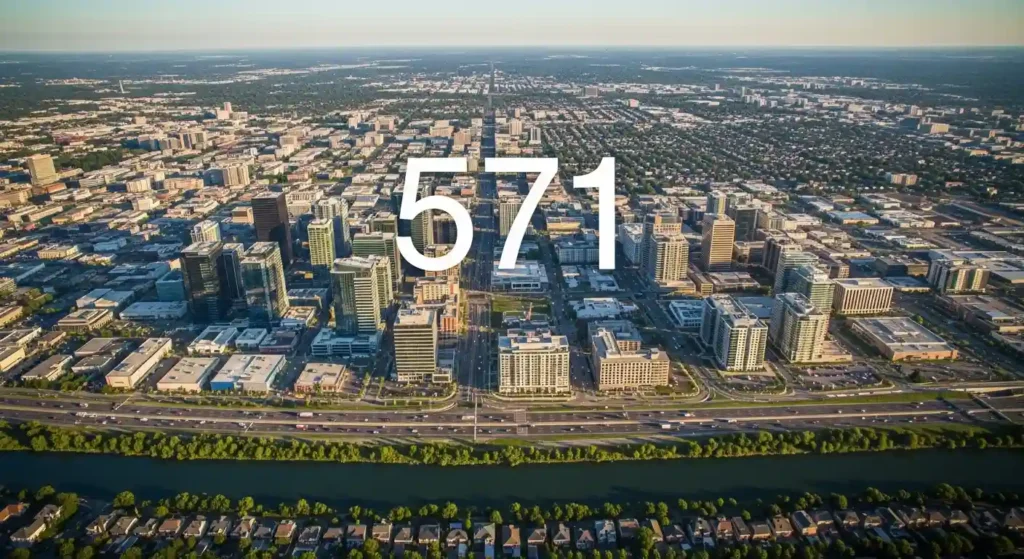
Area code 571 is a telephone area code in Northern Virginia, United States. It serves a heavily populated and economically significant region that sits right outside Washington, D.C.
This area code was introduced as an overlay for area code 703. What that means is both 571 and 703 cover the exact same geographic territory — they just exist to handle the growing demand for phone numbers in that region.
Northern Virginia is one of the most densely connected areas in the entire country, largely because of its proximity to the nation’s capital. Government agencies, tech companies, military contractors, and millions of residents all need phone numbers — and 703 simply ran out of available combinations.
Cities and Counties Covered by Area Code 571
Since 571 is an overlay of 703, it covers all the same locations. Here’s a quick look at the major cities and counties you’ll find under this area code:
Major Cities:
- Alexandria
- Arlington
- Reston
- Herndon
- Manassas
- Falls Church
- Fairfax
- Sterling
- Woodbridge
- Centreville
Counties:
- Fairfax County
- Arlington County
- Prince William County
- Loudoun County
- Stafford County
This region is often referred to as the “DMV area” — short for D.C., Maryland, and Virginia. It’s one of the most economically active corridors on the East Coast.
New York Giants vs Colts: Key Matchup Breakdown
A Brief History of Area Code 571
How It Started
Area code 703 was originally assigned to all of Virginia back in 1947. As the population grew and phone usage expanded, the state was split — and Northern Virginia kept 703.
By the late 1990s and early 2000s, the explosion of mobile phones, fax machines, pagers, and internet dial-up connections consumed phone numbers at a shocking pace. The existing 703 numbers weren’t going to be enough.
The Overlay Solution
In 2000, the North American Numbering Plan Administrator (NANPA) introduced 571 as an overlay code. Instead of splitting the region geographically, they layered a second area code on top of the same territory.
This approach had one major side effect — it made 10-digit dialing mandatory. You couldn’t just dial 7 digits anymore, even for a local call. Every call within Northern Virginia required the full area code plus the number.
Who Uses Area Code 571?
You’ll encounter 571 numbers coming from a wide variety of sources:
- Federal government contractors — Northern Virginia is packed with defense and intelligence contractors
- Tech companies — Many cloud and data infrastructure firms operate out of this region
- Residents — Millions of people living in Fairfax, Arlington, and surrounding areas
- Businesses — From small local shops to Fortune 500 companies with regional offices
- Mobile carriers — Cell phone numbers assigned to new subscribers in the region
If you’re getting calls from 571, there’s a strong chance it’s a legitimate Virginia-based contact. That said, scammers do spoof local area codes to make their calls look more trustworthy — more on that below.
Pros and Cons of the 571 Overlay System
Pros
- No geographic disruption — Businesses and residents didn’t have to change their existing 703 numbers
- More number availability — The overlay doubled the pool of available phone numbers
- Flexible for growth — As the region keeps growing, number exhaustion is less of an immediate concern
- Works seamlessly — Modern phones handle overlay codes without any confusion
Cons
- Mandatory 10-digit dialing — Even local calls require the full area code, which frustrated many people used to 7-digit dialing
- Caller confusion — People unfamiliar with overlays sometimes think 571 and 703 are different locations
- Scam risk — Spoofed 571 numbers are used by robocallers who want to appear local and trustworthy
- No instant geographic identification — You can’t tell from the area code alone whether a 571 number is a cell or landline
Common Mistakes People Make About Area Code 571
Assuming It’s a Scam
Not every unknown 571 number is a robocall. Many people panic when they see an unfamiliar area code and assume the worst. While you should always be cautious, 571 is a perfectly normal code used by millions of real people and businesses.
Thinking 571 and 703 Are Different Locations
This is one of the most common misconceptions. Since 571 is an overlay of 703, both codes serve the exact same geographic area. A person in Alexandria might have a 703 number and their neighbor could have a 571 number — they live in the same neighborhood.
Forgetting to Dial the Area Code
Some people, especially those who’ve lived in the region for decades, still try to dial just 7 digits out of habit. Since 10-digit dialing became mandatory with the overlay introduction, those calls simply won’t connect.
Confusing It with a D.C. or Maryland Number
571 is a Virginia number, not a Washington D.C. or Maryland number. D.C. uses area code 202, and Maryland uses 240, 301, 410, and 443. Don’t mix them up.
Best Practices When Dealing with 571 Numbers
If you’re receiving calls:
- Always let unknown calls go to voicemail first if you’re unsure
- Use a reverse phone lookup tool to check if a 571 number is legitimate
- Register your number with the National Do Not Call Registry if you’re getting unwanted calls
- Report suspicious numbers to the FTC at donotcall.gov
If you’re a business using a 571 number:
- Make sure your number shows up correctly on Google Business Profile
- Include your full 10-digit number on your website and marketing materials
- Consider verifying your number with major data aggregators so it shows as “legitimate” on caller ID apps
For personal use:
- Save contacts with their full 10-digit number to avoid confusion
- If moving out of Northern Virginia, ask your carrier if you can keep your 571 number — number portability laws allow it in most cases
Why Northern Virginia Has So Many Phone Numbers
There’s a reason Northern Virginia generates such high demand for phone numbers. This region is home to:
- The Pentagon, one of the world’s largest office buildings
- Amazon’s HQ2, which brought thousands of new employees
- Tysons Corner, a major commercial and financial hub
- Dozens of data centers that power a large share of the internet’s traffic
- A massive government contracting industry
All of these organizations require thousands of phone lines. Add in the residential population — which tops well over 2 million people across the covered counties — and you start to understand why one area code wasn’t enough.
Conclusion
Area code 571 is more than just a string of digits — it represents one of the most dynamic and fast-growing regions in the United States. Rooted in Northern Virginia and covering major cities like Alexandria, Arlington, and Fairfax, this overlay code was introduced to meet surging demand and has been serving residents and businesses reliably ever since.
Whether you’re returning a call, setting up a business line, or just satisfying your curiosity, understanding what 571 means helps you navigate phone communications with a lot more confidence. The key takeaways are simple: it’s a Virginia number, it shares territory with 703, and it belongs to one of the most connected corners of the country.
Next time a 571 number shows up on your screen, you’ll know exactly where it’s coming from.
Frequently Asked Questions
1. What state is area code 571 located in?
Area code 571 is located in the state of Virginia, specifically in the Northern Virginia region near Washington, D.C.
2. Is area code 571 the same as 703?
Yes, 571 is an overlay of 703, meaning both area codes cover the exact same geographic area in Northern Virginia. They were not split by location.
3. What cities are in area code 571?
Major cities include Alexandria, Arlington, Reston, Herndon, Fairfax, Falls Church, Manassas, and Woodbridge, among others.
4. Why am I getting calls from area code 571?
You could be receiving a call from a Virginia resident, a business, or a government agency. However, scammers sometimes spoof local area codes, so use caution with unknown numbers.
5. Can I keep my 571 number if I move out of Virginia?
Yes. Under the FCC’s number portability rules, you can generally keep your phone number — including its area code — even if you move to a different state, as long as you stay with a compatible carrier.