If you or your child has been dealing with a sore throat, stuffy nose, or pressure behind the nose that just won’t quit, adenoid pain might be the culprit. Most people don’t think much about their adenoids until something goes wrong — and when it does, it can be surprisingly disruptive to daily life.
This guide breaks down everything you need to know: what adenoids actually are, why they hurt, and what you can do about it.
What Are Adenoids and Why Do They Matter?
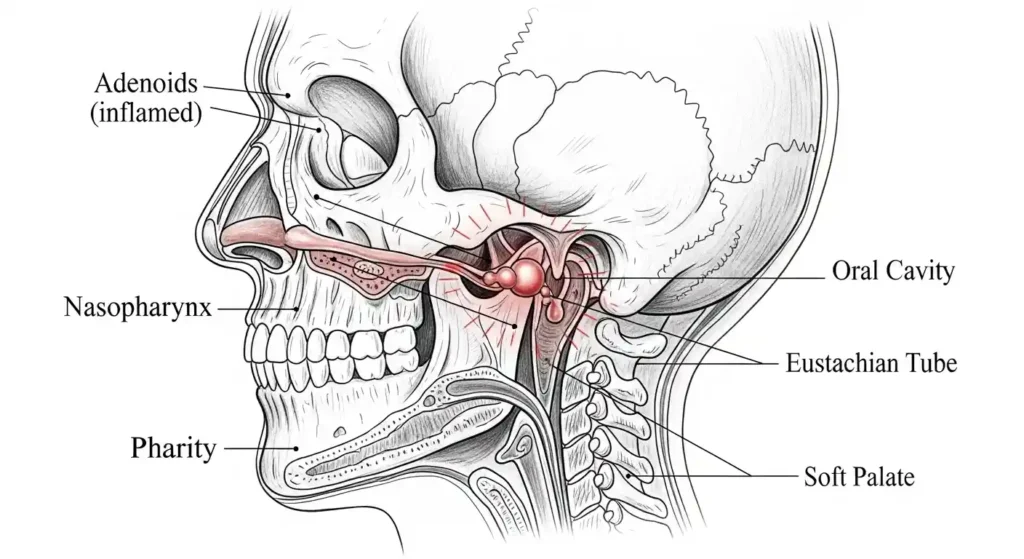
Adenoids are small lumps of tissue that sit at the back of the nasal passage, right above the roof of your mouth. You can’t see them by looking in the mirror, but they play a real role in your immune system — especially during childhood.
They work like a filter, trapping bacteria and viruses that enter through your nose or mouth. In kids, they’re most active and largest between ages 3 and 7. After that, they gradually shrink. By adulthood, most people barely have any adenoid tissue left.
But here’s the thing — while they’re doing their job, they can get infected, inflamed, or just plain enlarged. And that’s when the trouble starts.
Common Causes of Adenoid Pain
Adenoid pain doesn’t just show up out of nowhere. There’s usually an underlying reason.
Infections are the most common cause. Bacteria and viruses can cause the adenoids to swell up and become tender. Strep throat, the common cold, and flu are frequent triggers.
Chronic inflammation is another big one. Some kids (and adults) have adenoids that stay inflamed over long periods, often because of repeated infections or allergies.
Adenoid hypertrophy — which just means enlarged adenoids — can happen even without active infection. When adenoids grow too large, they block airflow and cause pain or pressure.
Other causes include:
- Allergic reactions (dust, pollen, pet dander)
- Gastroesophageal reflux (stomach acid irritating the throat)
- Environmental irritants like smoke or pollution
- Dental or sinus infections that spread nearby
Cache Warming Explained: Boost Site Speed Today
Recognizing the Symptoms
Pain and Pressure Around the Nose and Throat
One of the first signs is a dull, persistent pain or pressure at the back of the nose or in the upper throat. It’s different from a typical sore throat — it feels deeper, more central, and can radiate toward the ears.
Breathing and Sleep Issues
Enlarged adenoids often block the nasal airway. You might notice:
- Persistent mouth breathing
- Loud snoring at night
- Restless sleep or frequent waking
- Sleep apnea in more serious cases
Kids with this issue often wake up tired no matter how long they sleep, which can affect their mood, focus, and school performance.
Ear-Related Symptoms
Because the adenoids are close to the Eustachian tube openings, swollen adenoids can interfere with ear drainage. This leads to:
- Ear pain or a feeling of fullness
- Reduced hearing
- Recurring ear infections (especially in children)
Other Telltale Signs
- Thick nasal discharge (often yellow or green)
- A nasal-sounding voice
- Difficulty swallowing
- Bad breath
- Swollen neck glands
How Adenoid Pain Is Diagnosed
If you suspect adenoid problems, a doctor will usually start with a physical exam and a look at your symptoms. Since adenoids sit in a hard-to-see spot, diagnosis often involves:
- Nasopharyngoscopy — a small, flexible camera inserted through the nostril
- X-rays of the throat and neck — to see the size of adenoids
- Sleep studies — if sleep apnea is suspected
For children, pediatricians often refer families to an ear, nose, and throat (ENT) specialist for a proper evaluation.
Treatment Options That Actually Work
Home Remedies and Self-Care
For mild adenoid pain caused by a temporary infection, home care can go a long way:
- Saline nasal rinses help flush out mucus and reduce swelling
- Steam inhalation loosens congestion and soothes irritated tissue
- Staying hydrated keeps the throat moist and supports healing
- Honey and warm tea can ease throat discomfort naturally
- Elevating the head while sleeping reduces postnasal drip
Medical Treatments
When home remedies aren’t cutting it, medical options include:
- Antibiotics — prescribed when a bacterial infection is confirmed
- Nasal steroid sprays — reduce inflammation and shrink swollen adenoids over time
- Antihistamines — helpful when allergies are driving the problem
- Pain relievers like ibuprofen or acetaminophen for short-term relief
Adenoidectomy (Surgical Removal)
If adenoids keep causing problems despite treatment, surgery might be recommended. An adenoidectomy is a short, routine procedure done under general anesthesia. Recovery usually takes about a week.
Surgery is often considered when a child has:
- Repeated ear infections
- Chronic nasal obstruction
- Significant sleep apnea
- Persistent adenoid infections despite multiple antibiotic courses
Pros and Cons of Adenoid Removal
Pros:
- Significant improvement in breathing
- Fewer ear infections
- Better sleep quality
- Reduced frequency of throat infections
- Quick recovery time in most cases
Cons:
- Surgical risks (though rare) — bleeding, anesthesia reactions
- Post-operative pain for several days
- Not a guaranteed fix for all related issues
- Adenoid tissue can occasionally regrow in young children
Common Mistakes People Make
Ignoring symptoms for too long. A lot of parents write off mouth breathing or snoring as “just how they sleep.” But if it’s been going on for months, it’s worth getting checked out.
Self-diagnosing and skipping the doctor. Adenoid pain can mimic several other conditions — tonsillitis, sinusitis, or even dental problems. Getting the right diagnosis matters before you start treating.
Stopping antibiotics early. If a bacterial infection is involved, stopping medication the moment symptoms ease can let the infection bounce back — often stronger.
Over-relying on decongestants. Over-the-counter nasal decongestants aren’t recommended for young children and can cause rebound congestion in adults if used too often.
Delaying surgery when it’s clearly needed. Some families hesitate out of fear. But prolonged sleep disruption and chronic ear infections can genuinely affect a child’s development.
Best Practices for Managing Adenoid Health
- Act early on infections — don’t let a simple cold linger without monitoring
- Follow up with specialists if symptoms keep coming back despite treatment
- Keep the home environment clean — reduce dust, mold, and pet dander that trigger inflammation
- Teach kids to breathe through their nose as much as possible — mouth breathing dries out airways
- Maintain good hand hygiene to reduce the spread of infections
- Track symptoms in a journal — patterns help doctors make better decisions
Conclusion
Adenoid pain is one of those things that’s easy to overlook but hard to ignore once it gets bad. Whether it’s your child struggling through restless nights or you dealing with pressure and discomfort that won’t go away, understanding what’s happening in that small pocket of tissue can make a real difference.
The good news? Most cases respond well to treatment — whether that’s simple home care, medication, or in tougher cases, a straightforward surgical procedure. The key is not waiting too long to get help.
If symptoms are persistent, keep circling back or affecting quality of life, talk to an ENT specialist. You’ll likely have more options than you think.
FAQs
1. What does adenoid pain feel like?
It typically feels like a deep pressure or ache at the back of the nose or upper throat, sometimes extending toward the ears. It’s usually accompanied by nasal congestion or a muffled feeling.
2. Can adults get adenoid pain?
Yes, though it’s far less common. Adult adenoid tissue is much smaller, but it can still become inflamed or infected, especially in people with chronic allergies or recurring upper respiratory infections.
3. How long does adenoid pain last?
If caused by an acute infection, it usually improves within 7–10 days with treatment. Chronic adenoid issues can persist for weeks or months without proper care.
4. Is adenoid removal safe for children?
Yes, adenoidectomy is one of the most commonly performed pediatric procedures and is considered very safe. Serious complications are rare, and most children recover fully within a week.
5. Can adenoids grow back after removal?
In some cases, yes — particularly in very young children. However, regrowth is uncommon and usually partial. If it happens, the regrown tissue rarely causes the same degree of problems.